Logo von Tourism Watch

Literature

© Frank Schultze / Brot für die Welt

Digital Trends in Tourismus – Between Algorithms and Exploitation

Publisher: Brot für die Welt – Tourism Watch | Berlin | 2025

Digital technologies have shaped tourism for decades, yet recent developments are transforming the sector at an unprecedented pace. Automation enables travellers to act far more independently and to take on tasks that were previously carried out by trained staff. This shift towards unpaid labour coincides with tourism labour markets in the Global South that are often characterised by precarious conditions and informal structures.

Digital ecosystems are emerging that profoundly influence how destinations are perceived, how travel decisions are made, and how value creation is distributed. Algorithms structure visibility, immersive technologies generate new types of experiences, and social-media dynamics can lead to overcrowding of entire regions from one moment to the next. Generative AI may facilitate access to information, yet it frequently reproduces stereotypes or disseminates inaccurate content – particularly where local voices are digitally underrepresented. The growing anonymity of digital spaces also creates new opportunities for the grooming of children for sexual exploitation. Meanwhile, the ecological footprint of digitalisation continues to rise, especially due to energy-intensive servers and data centres.

At the same time, these technologies also offer opportunities: they can enhance the visibility of local providers, promote digital accessibility, expand educational resources, and support more sustainable travel planning. Ultimately, tourism remains a people-centred service sector. Hospitality, cultural understanding and local knowledge cannot be fully digitised. The human factor – including professionalism, contextual understanding and individual perspectives – remains essential for fair tourism development and satisfactory travel experiences.

Against this backdrop, the question arises of how technological innovation in tourism can be designed in ways that do not generate new forms of exploitation or inequality, but instead strengthen social responsibility, human rights and sustainable development. The study addresses this question and identifies key trends, risks and opportunities associated with the digital transformation of tourism.

The Decolonial Power of Community Tourism

Lukas Finkeldei (2018) | Challenging Colonial Paradigms in Ecuador´s Tourism Industry

This study focusses on the pedagogical effect of Community Tourism in the Ecuadorian context. Within the encounter between Western tourists and local rural communities, it analyses the potential reflection on structures of Coloniality that these projects can generate.

The research draws upon a combination of participant observations and in-depth interviews with both groups, while using Autoethnography as a method to integrate a critical personal reflection of the researcher. The study has shown the potential that direct contact between these two groups, and a self-determined and clear concept from the community have for decolonizing the tourism industry. The findings may be useful for communities offering touristic products to further strengthen their positions of auto-management and self-determination. 

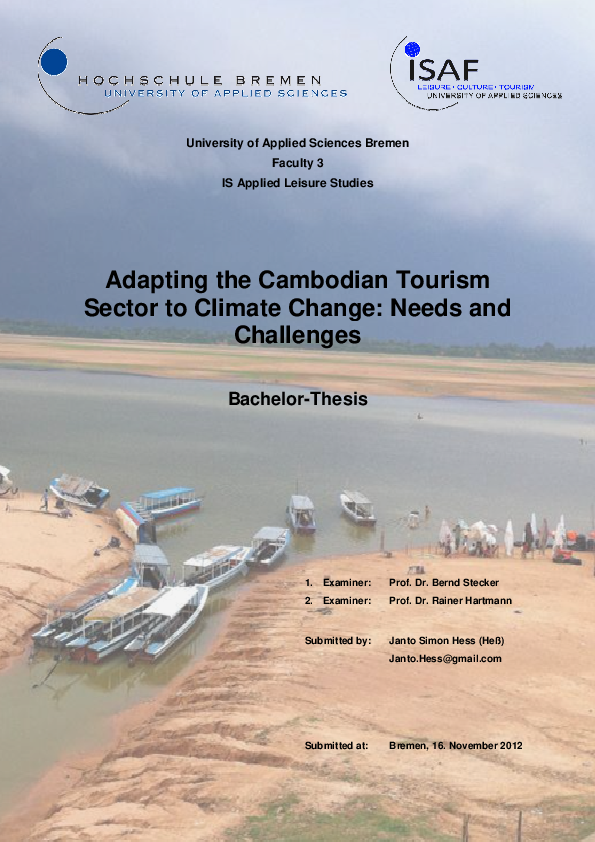
Adapting the Cambodian Tourism Sector to Climate Change: Needs and Challenges

Janto Simon Hess (November 2012) | This study focuses on the climate change adaptation of the tourism sector in Cambodia. Climate change adaptation has come into focus since it has generally been realised that climate change impacts are certain and inevitable, see reports such as the Stern report, in 2006, and the IPCC report, in 2007. In order to avoid significant damages and to reduce the consequences of impacts adaptation seems to be necessary in threatened regions around the globe.

Cambodia is among the countries that are expected to face significant changes in their climate. The tourism industry in the country generates a significant share of the countries gross-domestic-product (GDP). The current state and future growth of the tourism sector could be affected by the impacts of climate change. In light of this there is and will be a need to prepare the sector for upcoming challenges.

The aim of this study was to investigate the possible and already existing responses of the tourism sector to climate change. To limit this research the study focussed on the adaptation strategies of the tourism sector to climate change impacts on a national scale. The study investigates existing climate change predictions and climate derived impacts on the tourism sector. An adaptation indicator catalogue is developed, which on the one side is used to investigate the tourism sector and on the other side to provide an overview about possible adaptation options for different stakeholders.

In a final step already existing strategies and initiatives of the broader tourism sector was examined. The examination is based on a literature analysis and qualitative interviews with the most important stakeholders (such as the MoT, UNESCO, UNDP, Hanuman Tourism, etc.) of the sector. The investigation has shown that the tourism industry could be affected through a higher frequency of floods and droughts, increased operation costs, a loss of attractiveness as a tourism destination, and other impacts caused by climatic changes. The adaptation indicator catalogue was effectively used as tool to investigate the tourism sector. It was divided into three dimensions: the governmental dimension, the tourism industry dimension, and the co-operational and communicational dimension.

This structure enables stakeholders to easily understand the relevance of the adaptation options for them. From the examination of existing adaptation strategies it was realised that there are institutions, policies, initiatives, and programmes with a focus on climate adaptation already existent in Cambodia. Nonetheless, the Ministry of Tourism (MoT) as well as the tourism industry have only just started considering climate change as a threat to the future growth of the sector.

One main issue was the unreliability of existing climate predictions, which are partly based on limited data or do not provide region specific predictions. There therefore is a large uncertainty that prevents the tourism industry from implementing adaptation actions. The examination shows that there is limited awareness among sector stakeholders and that future educational programs are needed to mainstream climate change among them.

Another finding was that the current focus in the tourism sector and the aim of MoT to expand tourism in Cambodia often leads to insufficient consideration of regulations and laws, and natural impacts or occurring threats, such as those brought about by climate change are not incorporated in the development planning processes. In conclusion it can be said that the tourism sector is at the beginning of an adaptation process but there is a lot improvement needed to cope with future climate threats and to encourage sustainability in the sector.

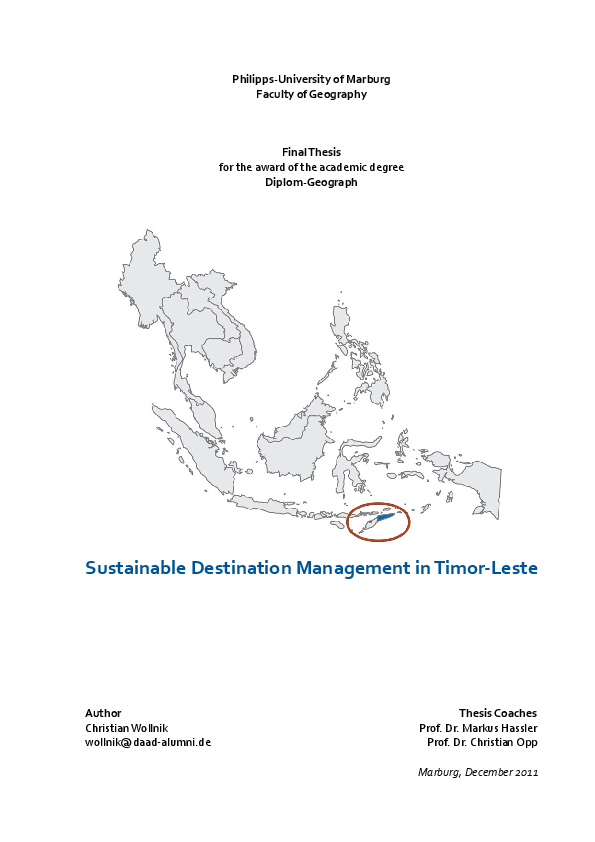
Sustainable Destination Management in Timor-Leste

Christian Wollnik (December 2011) | The destination became the main competitive unit in the tourism sector, and is defined as as a tourist product and then as a specific supply involving a set of resources, activities and actors of a territory. Further, sustainable destination management is defined as the joint management of a destination in consideration of the concept of sustainable development, and can be seen as the key tool for accomplishing a sustainable tourism development.

This study tackles the status quo of sustainable destination management in Timor-Leste. The fact that the tourism sector in Timor-Leste is still at a grassroots level must be understood as a huge chance to choose a ‘right’ pathway of tourism development, always bearing in mind that misguided developments cannot easily get adjusted in future.

The analysis focuses on five categories of sustainable destination management: (1) Organization of destination management, (2) destination planning and development, (3) destination marketing management, (4) human resource development, and (5) environmental management.

Regarding the organizational structures, the analysis leads to the tough but inevitable conclusion that Timor-Leste from a supply side point of view cannot be referred to as a destination, mainly due to the poor cooperation of its stakeholders and the absence of a strong steering entity. Against this background, the term management is inappropriate, as obviously is the notion sustainable.

A major problem in terms of planning and developing the destination lies in the huge discrepancy between the outlined vision and the strategies and actions undertaken to achieve this high-flying target: Tourism is officially prospected to be the countries second most important economic sector by 2030. In contrast, the strategies to achieve this ambitious goals are totally inappropriate, as they only imply actions that focus on small-scale and thus labor-extensive projects in the area of community-based tourism or ecotourism. A major obstacle in this context is that many of the destination’s stakeholders still understand sustainable tourism as a niche-concept instead of considering it a concept that should underly all all kinds of tourism from niche to mass markets and all levels of tourism planning and management.

Due to the lack of an integrated product, the current marketing activities focus on marketing the country, not the destination.

Regarding the development of human resources, it has to be stated that the number of apprenticeships is limited, while the courses offered only focus on low-skilled jobs in the area of cleaning and serving.

As there exists a huge awareness of the importance of vital natural resources for the future development among the destination’s stakeholders, the Government put serious emphasis on environmental issues since independence. Nonetheless, almost all facets of environmental management, such as the designation and management of protected areas, are still in its infancy.

Against the background of the findings of the status quo analysis, it seems likely that the Government sooner or later will make concessions towards investors that are on the country’s doorstep already, as more and more young Timorese put an increasing pressure on the labor market. This bears the risk of a future tourism development dictated by a couple of foreigners that downgrade the Timorese to an oft-quoted generation of waiters and cleaners.

In order to keep the control in Timorese hands, in the final recommendations the author calls on the destination’s stakeholders to finally be proactive. As a guiding concept he suggests his pragmatic Shrinking Triangle of Sustainable Destination Management in Timor-Leste. This model is based on a mainstreaming sustainability approach that combines the advantages of (mostly foreign) large-scale developments with the basic principles of the concept of sustainable tourism, in order to finally bridge the gap between visions and reality, and without neglecting essential sustainability issues at the same time.

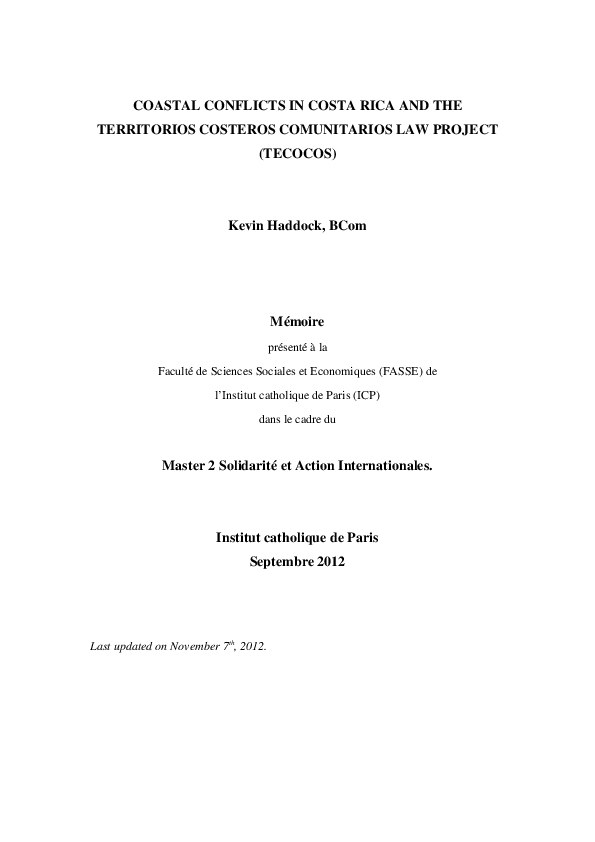
Coastal Conflicts in Costa Rica and the Territorios Costeros Comunitarios Law Project (TECOCOS)

by Kevin Haddock (September 2012) | This work aims to contribute to the debate on social conflicts generated by coastal development and the process of land tenure reform as a conflict resolution mechanism. We will present the case of the Territorios Costeros Comunitarios reform movement (TECOCOS) currently mobilized in Costa Rica and integrated by over 60 coastal communities.

This reform movement initiated in reaction to a recent wave of planned evictions threatening specific coastal communities on the Pacific Coast of Costa Rica, following a decade of aggressive coastal tourism development. The TECOCOS movement has produced two historic law projects that are currently in the Legislative Assembly of Costa Rica.

Since the majority of the social conflicts on the coasts of Costa Rica find their roots in the legal and regulatory framework (which includes the coastal land tenure system) and tourism policies, this thesis will attempt to demonstrate how the legal and institutional arrangements as well as the international trends in the tourism industry have led to unsustainable coastal development triggering the creation of a unified front of coastal communities demanding for social change and the recognition of their economic, social and cultural rights.

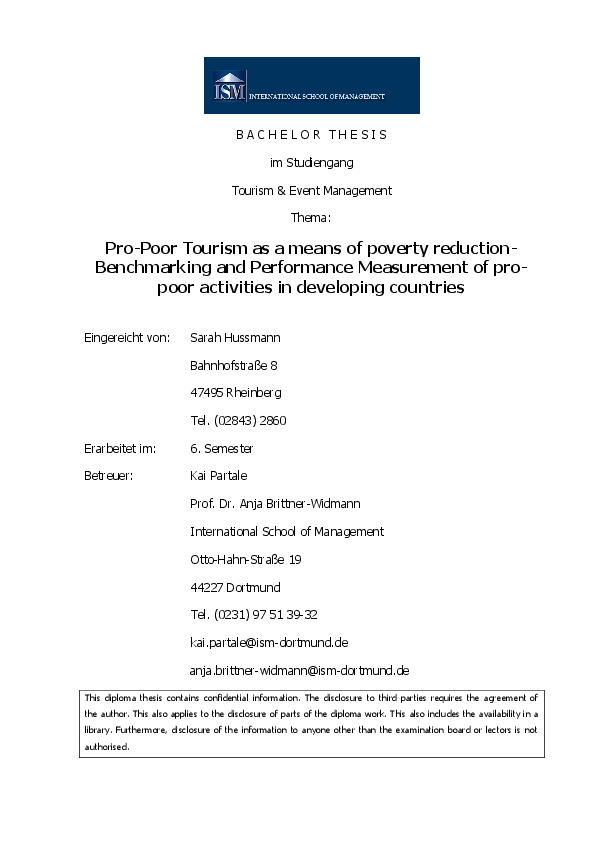
Pro-Poor Tourism as a means of poverty reduction- Benchmarking and Performance Measurement of pro-poor activities in developing countries

Sarah Hussmann (April 2010) | Can tourism reduce poverty? Is it feasible? How can performance be measured and projects be evaluated and compared in terms of global thinking? The discourse on this matter results as the consequence against the difficult background that there are several ways of reducing poverty and that there no fixed rules and common defini-tions about how tourism and different tourism types can generate benefits to the poor.

Originally, this thesis was solely supposed to describe community-based tour-ism, but new methodology like the value chain analysis and approaches like the creation of business linkages were found.

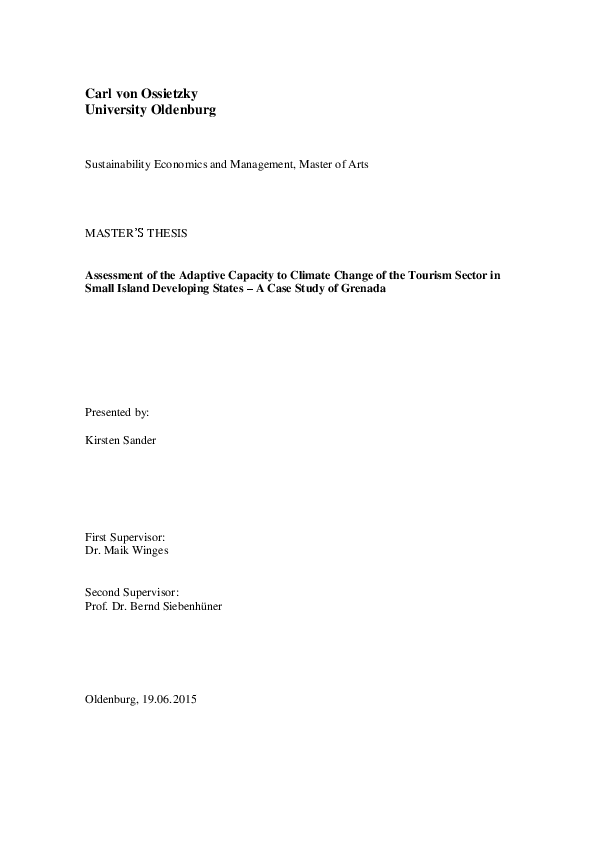
Assessment of the Adaptive Capacity to Climate Change of the Tourism Sector in Small Island Developing States – A Case Study of Grenada

Kirsten Sander (June 2015)

Since the end of the 19th century, the increasing anthropogenic greenhouse gas emissions, including carbon dioxide (CO2), methane (CH4), nitrous oxide (N2O) and halocarbons, in the atmosphere have had accelerating impacts on the natural greenhouse effect and thereby caused anthropogenic climate change. The largest contributor is the greenhouse gas CO2, whose atmospheric concentration increased by 40% since pre-industrial times due to fossil fuel emissions and net land use change emissions (cf. IPCC 2013, pp. 11ff). Despite global efforts to mitigate greenhouse gas emissions, the concentration of emissions are still increasing and the CO2 emission growth rate increased from 1.3% per year in the 1990s to 3.3% per year in the 2000s (cf. Scott et al. 2012a, p. 21). The uptake of these additional energy by the climate system caused an increase of the global average combined land and ocean surface temperature by 0.85° Celsius over the period 1880 to 2012 (cf. IPCC 2013, p. 5). This warming has caused losses in glacier mass and ice sheets as well as ocean thermal expansion, which has led to global mean sea level rise (cf. ibid., p. 9). Therefore, natural and human systems have to adapt to those and other negative current and future impacts. Adaptation can be implemented through technological options as well as through social, institutional and ecosystem-based measures. However, the uncertainty of long-term impacts and the effectiveness of adaptation options are just some of the barriers for successful adaptation to climate change (cf. IPCC 2014, pp. 4ff).

Especially small islands only contribute an insignificant portion to the global GHG emissions but belong to one of the most impacted groups; therefore, adaptation has been given priority. Small islands are vulnerable to current and future climate-related drivers of risk namely sea level rise, cyclones, increasing air and ocean surface temperature and changing rainfall pattern. Corresponding impacts on the ecological and social systems include shoreline changes, inundations, coral bleaching, changes in terrestrial biodiversity and decreasing rainfall and freshwater supply (cf. Nurse et al. 2014, pp. 1616ff). As opposed to this, some studies indicate that especially small island developing states (SIDS) possess a high natural resilience and showed strong social capacities to adapt to natural hazards climate issues since they have always been challenged by climate issues (cf. Hay 2013, p. 311; cf. Adger et al. 2007, p. 728). However, the natural resilience and adaptive capacity of SIDS are nowadays additionally pressured by global change (e.g. resource extraction), development, livelihood and local issues (e.g. unsustainable fishery). Hence, vulnerability is not an inherent characteristics but can be interpreted as a social construct in which marginalized groups within SIDS are most vulnerable (cf. Hay 2013, p. 311; cf. Adger et al. 2003, p. 181; cf. Adger et al. 2007, p. 728).

Many SIDS rely on the tourism sector as the main economic activity (cf. Hay 2013, p. 319). Tourism and the climate system mutually influence each other. On the one hand, the tourism sector is very dependent on the attractiveness of natural ecosystems, which makes the sector weather and climate-sensitive and thus vulnerable to climate change (cf. Nurse et al. 2014, p. 1623). Particularly the coastal social and ecological systems that sustain the tourism sector are threatened by rising sea levels, which put settlements, infrastructures, ecosystem services and economic stability at risk (cf. IPCC 2014, p. 24). On the other hand, the building of tourism infrastructure places stresses on coastal and other ecosystems and exacerbates the vulnerability of coastal zones to climate change impacts (cf. Nurse et al. 2014, pp. 1623f). The global tourism industry contributes 5% to global CO2 emissions, especially due to high transport volume and energy consumption (cf. Scott et al. 2012a, p. 100). Therefore, mitigation and adaptation needs and options are often interlinked in tourism infrastructure (cf. Nurse et al. 2014, pp. 1623f). Those synergies can be exploited especially due to the high potential of the tourism sector for mitigation measures, which are already part of good business practices and more widely spread than adaptation practices (cf. Becken et al. 2011, p. 79).

There is only a limited number of scientific studies on potential climate-related damages to the tourism sector (cf. Scott et al. 2012b, pp. 885ff). Additionally, there is only little knowledge about the adaptive capacity to accumulating and long-term climate and environmental impacts of the tourism sector in small island states (The CARIBSAVE Partnership 2012, p. 103). As a consequence, risk appraisal among tourism operators constitutes low awareness of climate change and does not include strategic planning and anticipation for potential climate risks. This compromises adaptive responses to the major threat of sea level rise and other climate-related impacts in small island tourism destinations (cf. Scott et al. 2012b, pp. 885ff). Long-term climate change impacts are given low priority in the tourism sector since short-term events, like external economic shocks, natural disasters or crime, have far more immediate impacts on the whole economy since they determine visitors’ choice (cf. Scott, Becken 2010, pp. 268ff). As Brooks and Adger (2004) suggest “a baseline analysis of adaptive capacity to cope with current climate” is a prerequisite to enhance adaptive capacity (Brooks, Adger 2004, p. 179). Public, private and civil tourism actors can possess and develop natural, technological, financial, human or social capacities to adapt to climate change impacts and thereby reduce vulnerability (cf. ibid, p. 168). In general, planned adaptation measures get more political attention but due to the dominance of the private sector in the tourism landscape, autonomous adaptation should be taken into stronger consideration (cf. Dubois, Ceron 2006, p. 404). Nevertheless, adaptive capacity cannot be directly measured quantitatively but rather be characterized by investigating possible changes of the sensitivity of human and ecological systems to climate (cf. Brooks, Adger 2004, p. 179). Moreover, mitigation measures in tourism businesses possess possibilities for integrating and mainstreaming adaptation, wherefore sustainable practices that have mitigating effects have the capacity to integrate adaptation actions (cf. Nurse et al. 2014, p. 1624). In order to contribute to the current state of research regarding climate change adaptation in the tourism sector in small island states, especially in developing states, the following research question was developed:

“What are the determinants of adaptive capacity to climate change of tourism actors in a small island developing state?”

In order to reveal a more comprehensive understanding of the determinants, their characteristics should be investigated in more detail. Hereby, indications for ways to enhance individual determinants can be given. Thus, a subsequent research question is:

“What are characteristics of the determinants of adaptive capacity?”

Some scientists have remarked that research on development, governance and management of tourism destinations from a resilience perspective was insufficient (cf. Luthe, Wyss 2014, p. 161). Therefore, this thesis discusses adaptive capacity to climate change also as an aspect of the resilience concept. Adaptive capacity can increase resilience and decrease vulnerability of a social-ecological system. A tourism destination can be seen as a social-ecological system whereby the reciprocity of climate and tourism is incorporated.

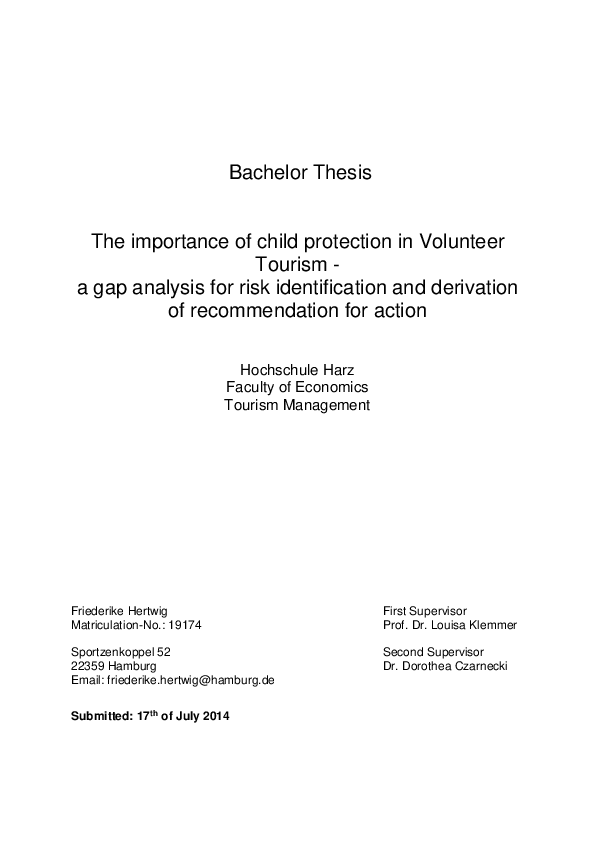
The importance of child protection in Volunteer Tourism – a gap analysis for risk identification and derivation of recommendation for action

Friederike Hertwig (July 2014) | The hype of volunteering in foreign countries and indicating social commitment has been growing over the past decade. As volunteer tourism only developed towards an increased demand in recent years, the research is still not sophisticated. Hence, many key researchers of volunteer tourism have raised their voice for more critical analysis for impacts on local communities (Guttentag, 2009; Sin, 2009; Zahra & McGhee, 2013; Wearing, 2013).

In the tourism sector but also in other businesses, suppliers have introduced corporate responsibility as a management tool in order to consider all stakeholders and minimise negative impacts. Similarly, in volunteer tourism the providers need to find a way to protect the rights of local communities and especially their children. Children are particular vulnerable as they are still in the phase of development. The demand for volunteer tourism with children has increased and many children in developing countries are put at risk. Volunteer tourism claims to help children and contributes to a positive development work.

Yet, recent trends have moved towards a profit-driven industry, focussing less on children’ needs. Due to the life-long and severe consequences on children’s development and the increasing demand for volunteer tourism, the need for an implementation of regulations and standards to prevent negative impacts for children, is constantly increasing.

From “Fair Trade Tourism” to “Fair Trade Holidays” – A Tourism Innovation Based on a Sustainability Standard

Yannic Fischer (June 2015) |  Holidays or Fair Trade Travel Packages1 to South Africa since 2010, which are certified travel packages meeting certain requirements to enhance sustainable development in the destination (FAIRUNTERWEGS 2010c). This concept was launched by Fair Trade Tourism (FTT), a South African-based tourism NGO which has been certifying tourism service providers in southern Africa since 2003 as the first fair trade label in tourism (FTTSA 2012, p. 10). FTT represents a very innovative service standard including a strong focus on social issues (STRAMBACH & SURMEIER 2013, p. 736). While FTT has been regarded as an approach to improve operations on the local level in the framework of national strategies, the initial fair trade concept from Europe referring to commodities was established with the focus on trade practices and agreements that ensure fair trade relationships (MAHONY 2007, p. 400). This is the point where the Fair Trade Holiday approach comes into play since it puts emphases on fair trading relationships along the whole value chain. Tourism business owners and workers in southern Africa are supposed to benefit from this concept by guaranteeing:

  • A fair share of the profits from tourism
  • Fair wages and working conditions
  • Long-term trading security
  • Community development opportunities
  • Access to new markets

Indeed, Fair Trade Holidays represent the first realised attempt to implement such a system for international trade in tourism services (FAIR TRADE TOURISM 2015b). The concept of Fair Trade Holidays is innovative in two respects: 1. It is the first attempt to certify an entire service as it has been done already with commodities such as agricultural products (e.g. bananas or coffee). 2. It represents an initiative stemming from the South being implemented by actors from the North. Usually, it is the other way around.

Volunteer Tourism: An In-depth Analysis of the Potential German Volunteer Tourist

Sophie Junge (August 2016) | In a continuously growing and diverse industry such as tourism, it is essential for tour operators and tourism organizations to enter new markets, and attract new customers in order to stay competitive. Volunteer tourism is a growing niche market, which more and more commercial tourism organizations are getting involved in. This development is rooted in the increasing travel experience of society, low airfares, social media and increasingly adventurous and curious mindsets of tourists, seeking to experience a new form of travel. Volunteer tourism describes the phenomenon of combining the thirst for traveling and experiencing an adventure with the wish to volunteer abroad and to help the less fortunate. In Anglophone regions, this form of travel is already more prevalent, however, the trend is also expanding in Germany. Therefore, this thesis investigates potential German volunteer tourists in terms of their characteristics and motivations. The analysis and creation of a profile of the potential German volunteer tourists can simplify the decision-making process of tour operators whether to enter this niche market or not. Additionally, the findings are vital for tour operators, as marketing and advertising could be adjusted according to the target markets. Moreover, to satisfy customers’ needs, volunteer vacations could be designed accordingly. The overall findings show that a typical German volunteer tourist is young, during their first course of education, seeking to experience an adventure and to develop the own personality, while at the same time wanting to give something back to people who are less privileged.

Child Exploitation and Tourism at the Example of Orphanage Tourism: A Situation Analysis on the Current Situation of Orphanage Tourism in Myanmar Including a Comparison of Myanmar and Cambodia

Julia Hanel | While in industrial countries most of the residential care institutions for children are replaced by alternative child care the number of orphanages increased at tourist hotspots in developing countries. The reason for this is the booming orphanage tourism. In some countries as Cambodia this type of tourist activity already turned into a huge business (Horton, 2011). Tourists and Volunteers want to do something good and many of them decide to do this by visiting, donating and working at orphanages. But instead of doing something good they support a corrupt business which exploits children. The children have to suffer under family separations, mental and physical neglect, labour and sexual exploitation. (Better Care Network, 2017; Tourism Concern, n.d.a.; Carmichael, 2011). While the business already established in some countries other countries are still unaware of it. Myanmar is one of these countries. Due to widespread poverty and a young tourism industry the concerns grew that Myanmar could turn into a second Cambodia with an increasing orphanage tourism business (Asian Development Bank, 2017b; UNICEF, 2012). Currently nearly no data exists on the current situation of orphanage tourism in Myanmar. Therefore, this thesis focused on the two questions ‘What is the current situation on orphanage tourism in Myanmar?’ and ‘What are the causes of orphanage tourism?’. A literature research was undertaken to understand what child protection, child abuse and exploitation and residential care institution mean. Afterwards the phenomenon orphanage tourism was analysed by using Cambodia as a case study and creating a problem tree to identify the causes who lead to the phenomenon. Poverty, missing laws, unawareness on the risks of orphanage tourism, corruption and missing monitoring mechanism were the main causes. Finally a field research was undertaken in Myanmar. 48 in-depth interviews with principals form residential care institutions were conducted at the four tourism destinations Yangon, Bagan, Mandalay and Inle Region. After the field research the findings were compared with the causes from the problem tree to evaluate the current situation of orphanage tourism in Myanmar. As a result it can be said that orphanage tourism has yet not developed into a widespread business but some of the interviewed places already welcome tourists as well as foreign visitors. An understanding of the terms orphanage tourism or child protection hardly exists. Further research, for example in form of surveys on the tourists behaviour, is needed to gain more information on the current situation as well as the implementation of awareness raising measures for residential care institutions, tourists and volunteers, the government of Myanmar and the tourism industry. If these actions taken place soon the establishing of an orphanage tourism business can be avoided to protect the children of Myanmar.

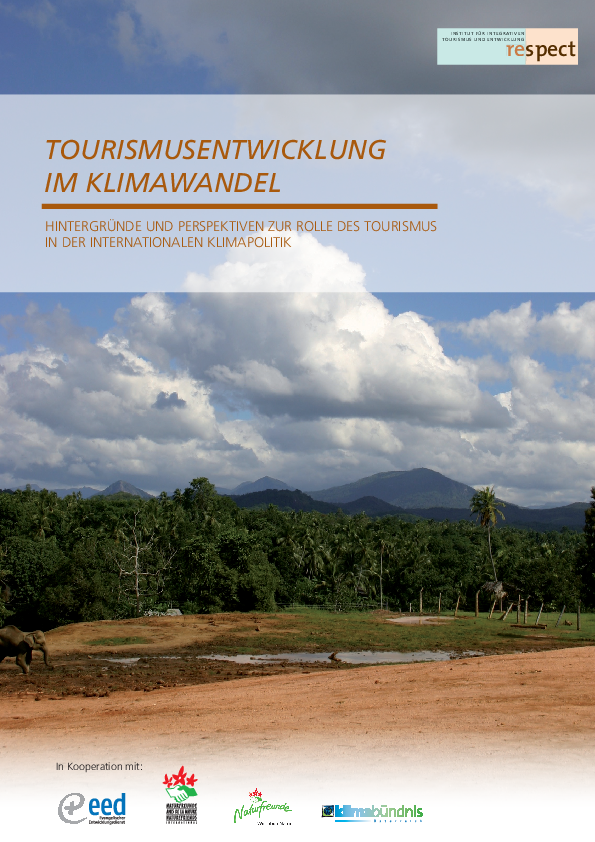
Tourism Development in a changing Climate

Tourism Development in a changing Climate: Backgrounds and Perspectives on the Role of Tourism in International Climate Politics
eed Evangelischer Entwicklungsdienst e. V. – Tourism Watch, respect, Naturfreunde Internationale, Naturfreunde Österreich und klimabündnis | Vienna | 2009

On the United Nations Climate Change Conference in Copenhagen in December 2009 Respect – a institution for integrative tourism and development in Vienna – has issued this publication in cooperation with the EED – Tourism Watch and Naturfreunde Internationale. This issue explores backgrounds and perspectives regarding the role of tourism within the international climate policy.

Magic Formula CSR?

Magic Formula CSR? Corporate Responsibility between Voluntary Commitments and Binding Regulation. A Contribution to the Debate on the Quality of Voluntary CSR Measures in Tourism
eed Evangelischer Entwicklungsdienst e. V. | Bonn | 2010

The topic of voluntary Corporate Social Responsibility (CSR) has reached the mainstream of the tourism industry. Although we welcome this trend, a debate about the quality of voluntary measures is necessary. Within the position paper of EED Tourism Watch businesses as well as the political decision makers are requested to set standards for transparency and commitment. Exemplary activities of the travel industry as well as fields of actions, in which businesses bear a special responsibility, are presented in this publication.

Beyond Greening (short version)

Reflections on Tourism in the Rio-Process
eed Evangelischer Entwicklungsdienst – Tourism Watch, Alba Sus, Kabani und Terramar | Bonn | 2012

At the Rio Earth Summit in 1992, the international community adopted important resolutions about how the precious resources of our planet should be equitably shared and protected for present and future generations. Despite positive achievements over the past two decades, we are a far cry from a truly sustainable path. New momentum is urgently needed to re-orientate international actors to the promises of Rio.

Flying green

Potentials, Risks and Perspectives of Agrofuels in the Aviation Sector
Brot für die Welt – Tourism Watch | Berlin| 2014

International climate policy aims to limit global warming to a maximum of two degrees Celsius by the end of the 21st century in relation to pre-industrial era. To obtain this goal, effective climate protection measures must be implemented soon. Due to the immense growth of air travel, aviation has to assume responsibility for contributing to challenges of climate change and deal with scarce crude oil reserves.


Transforming Tourism

Brot für die Welt – Tourism Watch, arbeitskreis tourismus und entwicklung (akte) und TourCert gGmbH | Berlin | 2016

Within the 2030 Agenda for Sustainable Development the international community commits to achieving a fairer and more sustainable world within the next 15 years. A deeper systemic change towards a sustainable lifestyle, consumption and production patterns must affect all social, economic and political sectors – including tourism. Tourism partly contributed to the current global challenges arising and at the same time holds the potential to significantly contribute to its solutions.

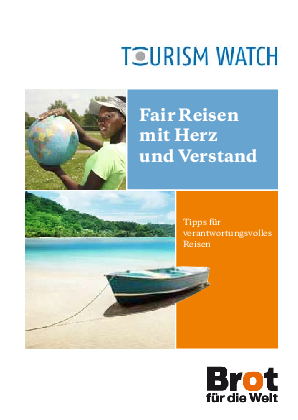
Fair tourism – A matter of heart and mind

Tips for fair travel (new edition 2016)
Brot für die Welt – Tourism Watch, Berlin | 2016

The booklet in a convenient pocket format stimulates reflection and analysis regarding the impacts of tourism and gives practical tips for a fair and socially responsible way of travelling. At the same time, it is humorous and without a moralising undertone.

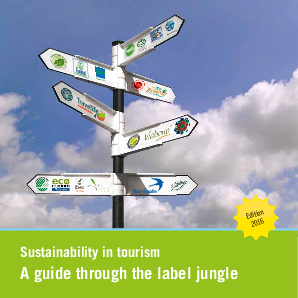
Sustainability in tourism

A guide through the label jungle (new edition 2016)
Brot für die Welt -Tourism Watch, Naturfreunde Internationale, arbeitskreis tourismus und entwicklung (akte) und ECOTRANS e. V. | Berlin | 2016


The arbeitskreis tourismus und entwicklung (akte), Ecotrans e. V., the Naturfreunde Internationale and Tourism Watch at Brot für die Welt have updated the famous „guide through the label jungle“ for the third time. Within the booklet, the standards of the most important 20, of more than 150, touristic sustainability labels are compared. Thus, it gives responsible travellers valuable guidance and with it the possibility to choose travel offers, which respect human rights, conserve the environment and bring an actual benefit to the regions visited.

From Volunteering to Voluntourism

Challenges for the Responsible Development of a Growing Travel Trend
Brot für die Welt – Tourism Watch, arbeitskreis tourismus & entwicklung (akte) und ECPAT Germany | Berlin | 2018

Spending some time abroad and experiencing how people live in a different country is an impressive and very enriching experience. After all, travelling contributes to one’s education – and how much more so does a trip that offers insights behind the tourism scenes and makes authentic experiences possible. Commercial tour operators are also increasingly discovering the now lucrative business field travel and “help”. Development-related learning through intensive preparation and follow-up, effective child protection and cooperation at eye-level with local organisations are important criteria for effective and responsible volunteering. But as our research shows, these are far from standard in the sector.

Techno-disruptions and travel

Examining the impact of platformisation in the Indian tourism sector
Publisher: Brot für die Welt, Tourism Watch and IT for Change | Berlin | 2020

On behalf of Tourism Watch, IT for Change analysed, how digital travel platforms and online travel agents are changing the value chain in India. The study sheds light on the effects for micro, small and medium enterprises such as owners of small hotels and homestays or tour guides in the two destinations of Jaipur and Manali. It shows that not all actors are well-placed to use platforms to their benefit.

Tourism Watch Information Service

In-depth insights and international perspectives on tourism and global justice – published quarterly.
Logo von Tourism Watch
© 2026 Tourism Watch / ECPAT Deutschland e.V.